

by Dana Wineland O’Rourke, contributing writer
The real sign that spring had arrived wasn’t the sunshine.
It was sidewalk chalk.
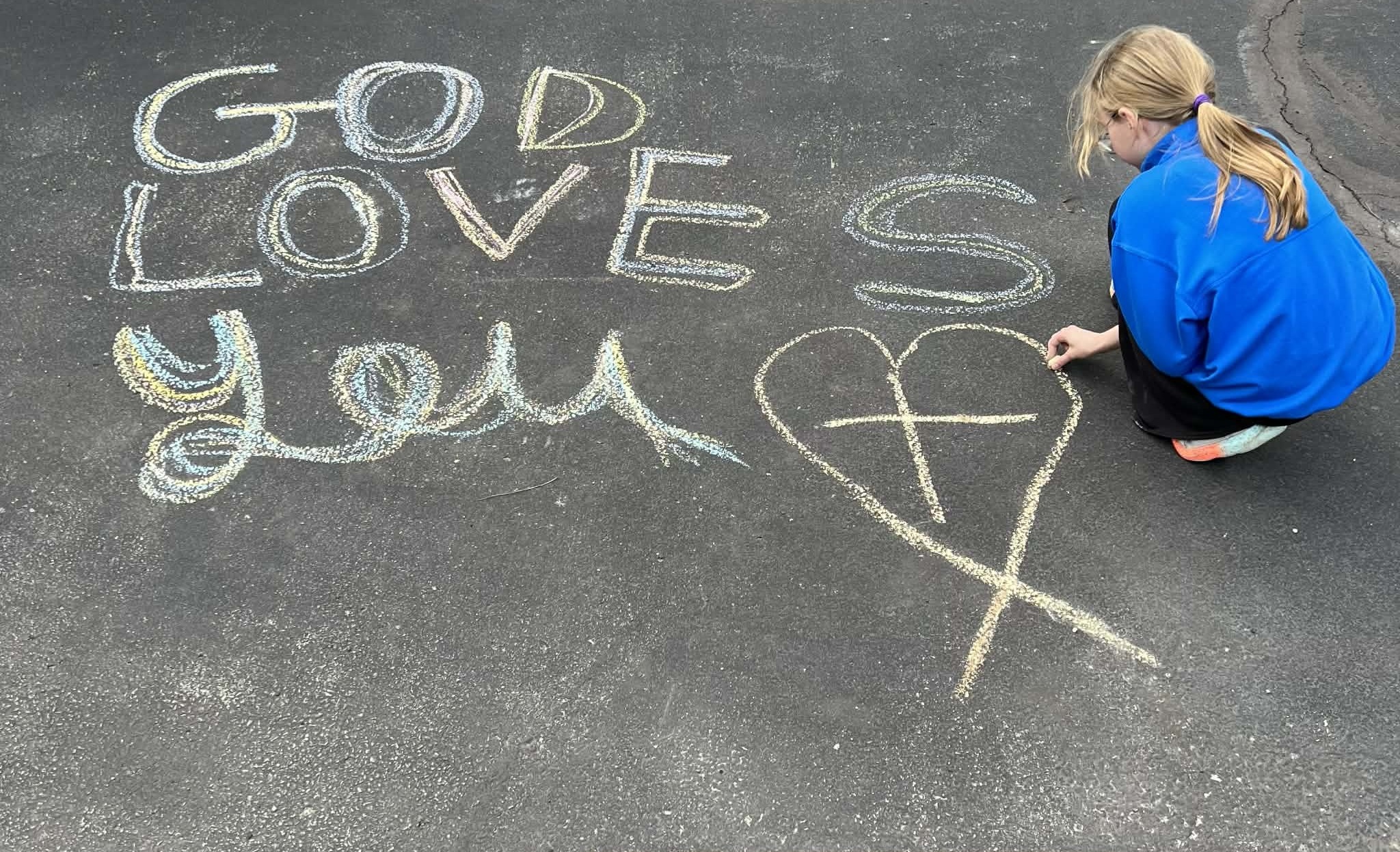
Our youngest son’s driveway was covered in it – colorful drawings, arrows, and instructions perfectly framed by a few inches of snow where the grass met the blacktop. After a Pittsburgh winter that dumped nearly 50 inches of snow and delivered several subzero days, the long-awaited sunshine hitting my face felt more welcome than ever.
“Look at this,” I exclaimed with a smile.
He shared that the kids had taken advantage of the burst of warm weather and had been playing outside when his 10-year-old daughter drew an obstacle course that began where he parks his car and led to the garage code box. When he arrived home from work, she watched from the dining room window to see if he completed the course. Much to her delight, and his, he did.
From my first attempt at drawing hopscotch on the sidewalk, I was hooked. The chalk felt good in my hand, and the freedom of creating something fun yet temporary was thrilling. Unlike today’s kids, who have a variety of colors, we only had white chalk in those days, but we let our imaginations run wild as our knees became dirty and red.
When my sons were born in the 1980s, four colors in a pack was the norm, and we made the best of it. Our kind-hearted next-door neighbor’s block garage was their favorite canvas. They preferred drawing maps, targets, and funny characters to hopscotch. Rubber balls were hurled at “bad guys,” and water balloons were tossed at bull’s-eyes. By the time squirt guns and the hose got involved, the garage wall was cleaner than when they started playing and so were the boys.
Years later, our toddler granddaughter had me once again putting what little drawing skill I had to work. Flowers are my specialty, and the bigger box of colors improved my projects. She would giggle with pride as I asked her to stand in the green circle or jump in the pink triangle. We would also shave down the nubs of chalk using a flat stone and mix it with play sand to make colored sand art. I may still have a baby-food-jar paperweight somewhere.
Three additional granddaughters and bigger driveways came along, allowing us to get more creative. Besides hopscotch, I had the girls lie on the cement while I traced them. Before they got up, I’d draw butterfly or fairy wings, a mermaid tail, or a crown and wand behind them. They reminded me of baby birds, their eyes squinted shut from the sun and their little mouths opening with questions and laughter. Once they stood to see what I had drawn, they’d reach into the coffee can full of chalk, grab a few colors, and get busy.
Our grandsons, like their dads, enjoyed sidewalk chalk on rare occasions. Navigating my drawings of crooked scooter and bike paths with silly road signs was a hit. Regardless of who got chalky, everyone got popsicles.
As I stood there soaking up the artwork and the sun, I thought about the joy sidewalk chalk has given me over the years.
Historians trace chalk street art back to 16th-century Europe, when traveling artists used chalk, coal, and tile to decorate public spaces for festivals and religious celebrations. By the mid-20th century, sidewalk chalk was being marketed as a toy and quickly became a favorite childhood pastime.
Its popularity surged again during the COVID-19 pandemic in 2020, when social distancing limited access to parks, playgrounds, and gathering spaces. People turned sidewalks and driveways into canvases, sharing messages of gratitude, hope, and humor—often using hashtags like #ChalkYourWalk.
That renewed enthusiasm may have helped sidewalk chalk earn a place in the National Toy Hall of Fame in 2020, recognizing it as a classic toy enjoyed for generations.
Competition with technology has made many toys, including classics, less appealing to children. I tried virtual reality for the first time recently when my youngest grandson introduced me to Waltz of the Wizard. By simply wearing a headset, I was placed inside a computer-created world where I could see, move about, and interact as if I were really there. It was amazing!
Fortunately, sidewalk chalk products including traditional chalk, jumbo chalk, dustless chalk, liquid chalk, and spray chalk still have enough fans that an estimated $100 million will be spent on chalk worldwide this year.
Count me in on making my yearly purchase! Sidewalk chalk is a fun and inexpensive way to keep kids active, creative, and outdoors.
When I put pencil to paper, I draw like a fourth grader. But put a fat piece of chalk in my hand and suddenly I’m Da Vinci.
It’s a little harder getting up and down on the pavement for this grandma, but I’m solar powered.
I run much better with sunshine!
***
 About the author: Freelance writer Dana Wineland O’Rourke retired after wearing the many hats required for her position as a school secretary for 30 years. A lifelong resident of Monongahela, Dana has been married to Tim for 47 years. Their two sons and daughters-in-law made the family an even dozen with six grandchildren. She enjoys spending time with family, traveling, gab & grubs with friends, biking, and fitness classes at the YMCA.